Why Am I Losing Clients to Competitors? (And How to Fix It)

You know your work is good. Clients who choose you are happy, referrals happen, testimonials are glowing. So when a prospect goes quiet after a proposal, or tells you outright they went with someone else, it stings in a very specific way: not because you did anything wrong, but because you can't explain why they picked someone else instead.
Losing clients to competitors rarely comes down to who does better work. Most of the time, it comes down to what happened before the comparison: whether the prospect knew what made you different, how fast you responded, and whether your pricing felt like a risk or an investment.
This post breaks down where that gap usually opens up and what to do about it.
It's Rarely About the Quality of Your Work
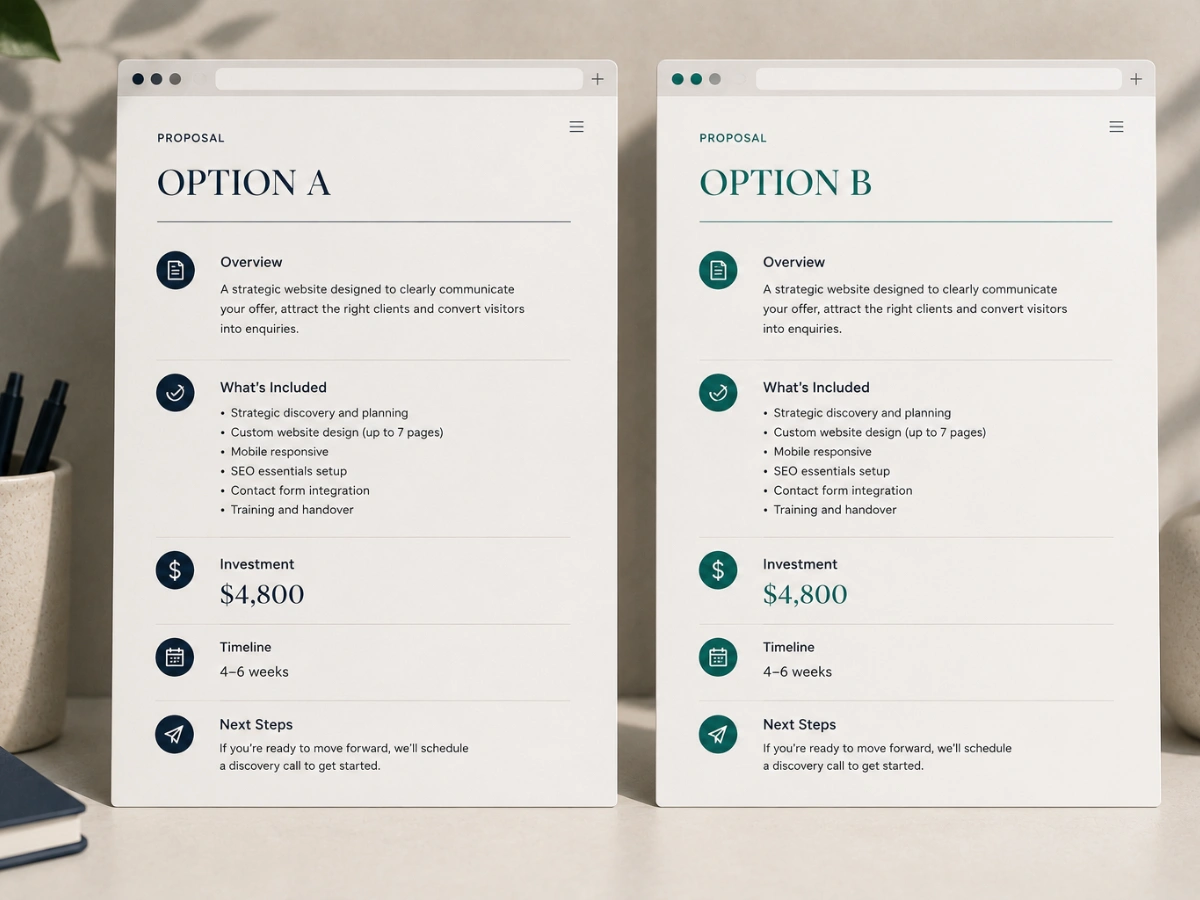
When a client picks a competitor, it's tempting to assume they simply liked the competitor's portfolio more, or found a lower price. Sometimes that's true. More often, the decision was made before either portfolio or price came into play, in the first few minutes of research when the prospect was trying to work out who even understood their problem.
If your website and a competitor's website say almost the same thing, a prospect has no reason to weigh your actual capability. They default to whichever signal is easiest to compare: price, response time, or how confident the proposal sounded. None of this is about the work. All of it is about how the decision was framed before you were ever in the room.
Where the Comparison Actually Happens

The Decision Is Usually Made Before You Speak
Most service businesses assume the sales conversation is where they win or lose the client. In reality, most of that decision is made earlier, while the prospect is quietly comparing websites, proposals, and first impressions, often before they've spoken to either business at length.
If a competitor's homepage clearly states who they help and what result they deliver, and yours reads like a general capabilities list, the prospect walks into your call already leaning toward the competitor, whether they realise it or not. By the time you're presenting your case, you're playing catch-up on a decision that's already half made.
This is why sharpening your website and proposal template does more to win comparisons than trying to out-argue a competitor on a call.
The Follow-Up Speed Problem
Speed is a bigger factor than most service businesses want to admit. A prospect comparing three providers will often choose whoever responds first with a clear next step, even if the other two are equally capable. Silence, even professional, considered silence, reads as disinterest.
If your process involves a multi-day wait before a prospect hears back, you're handing your competitors the exact window they need to close the deal first. This doesn't mean rushing a proposal. It means acknowledging the enquiry immediately, setting a clear expectation for when they'll hear more, and holding that timeline.
Signs You're Losing on Perception, Not Price
- Prospects mention a competitor's name or a specific feature before you've brought either up.
- Your win rate drops the longer a decision takes, not the higher your price goes.
- Lost prospects describe the competitor using words that could just as easily describe you.
If you're not sure whether you're losing on price or on perception, book a free discovery call with Hayley and we'll look at your last few lost proposals together.
Why Am I Losing Clients to Competitors?
You're likely losing clients to competitors because your value isn't clear before the comparison starts, not because your work is worse. Slow follow-up, vague pricing, and a website that doesn't differentiate you all push undecided prospects toward whoever makes the choice feel easiest and safest.
Conclusion
Losing a client to a competitor feels personal, but it's rarely a verdict on your ability. It's usually a signal that your positioning, response time, or pricing clarity gave the prospect an easy reason to look elsewhere. Fix those and the comparison starts working in your favour instead of against it.
The businesses that win consistently against competitors aren't always the most talented. They're the ones who make the decision easy: clear positioning, fast follow-up, and pricing that's explained rather than defended.
If you're tired of losing winnable deals to competitors, book a free discovery call with Hayley and we'll pinpoint exactly where the comparison is slipping away from you.