Why Referrals Stop Scaling (And What to Build Instead)
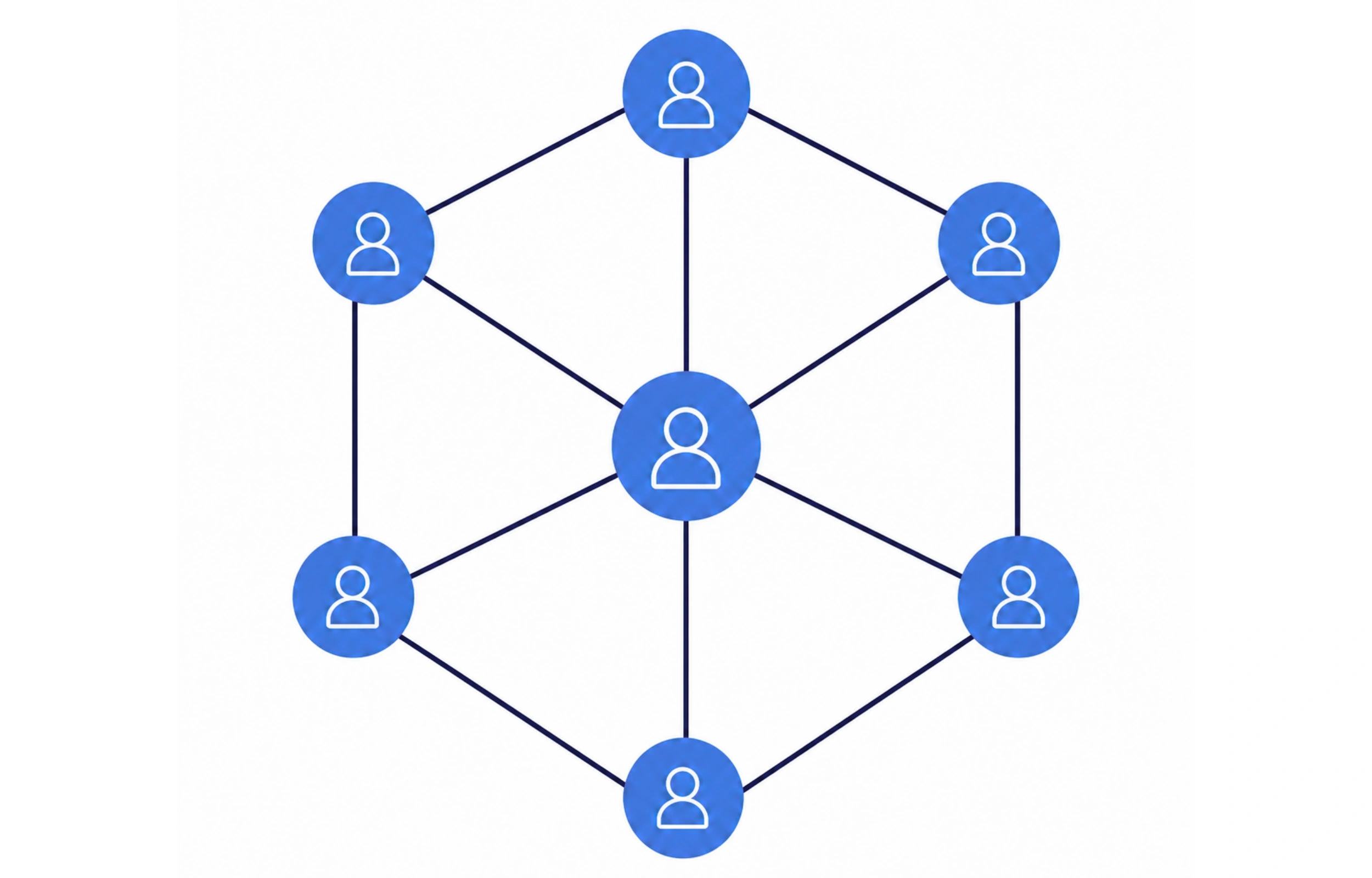
Referrals are how most service businesses grow in their early years. A happy client mentions you to a colleague. That colleague books. They mention you to someone else. The business builds, mostly through word of mouth, and for a while that feels like enough.
Then, at some point, it stops feeling like enough. The referral flow does not dry up completely, but it plateaus. The pipeline becomes unpredictable. Growth requires a different kind of effort than it used to. And the business owner, who has been excellent at the work for years, starts to feel like something is wrong.
Nothing is wrong. This is a structural reality of referral-dependent growth, and almost every service business hits it eventually. Understanding why it happens is the first step toward building something more durable.
Referrals Have a Ceiling and That Ceiling Is Your Network
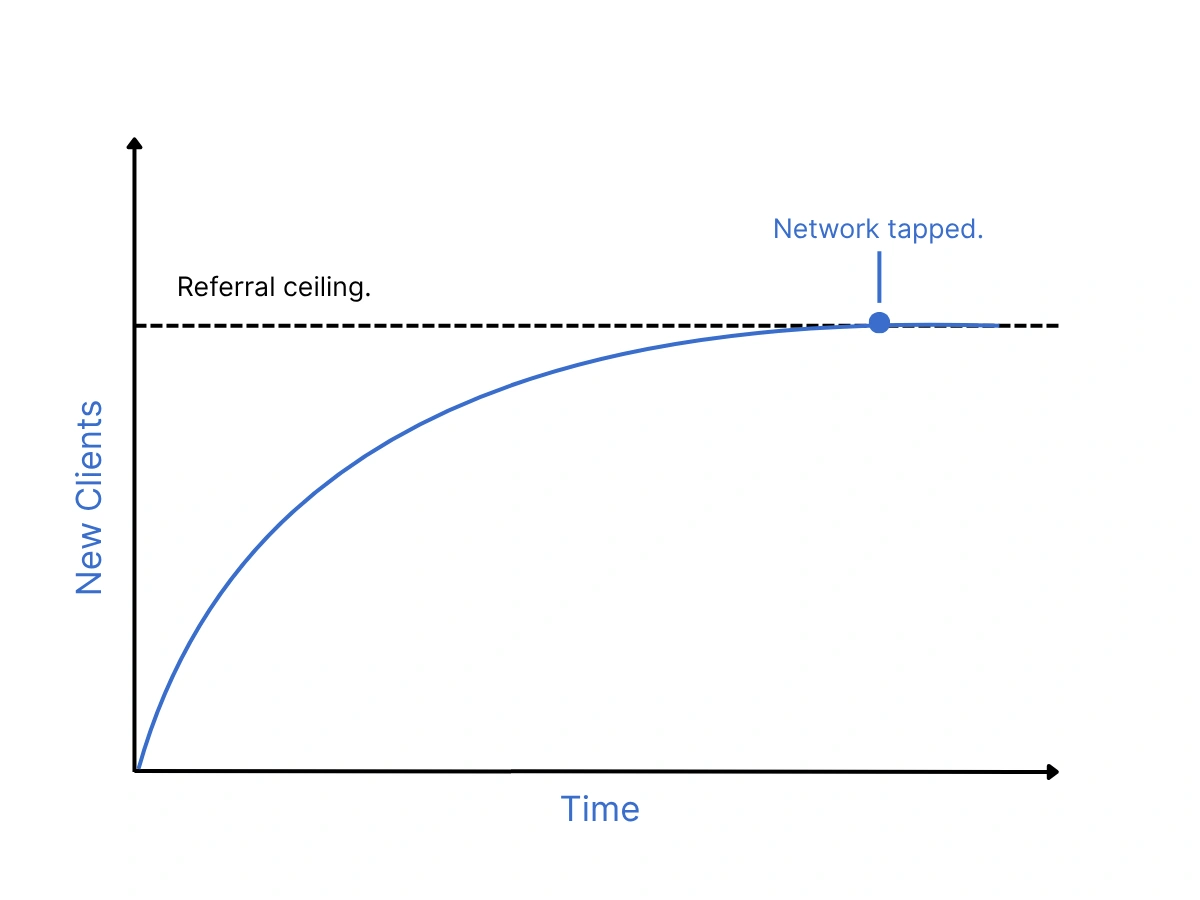
Referrals are built on trust, and trust is built through relationships. Your clients refer you because they know your work and they trust you enough to put their own name behind the recommendation. That is an incredibly powerful thing.
It is also finite.
Your personal network has a ceiling. Your clients' networks have a ceiling. When you have worked your way through the people most likely to refer you (the ones who know you well, have seen your work, and are connected to the types of clients you want) the referral pipeline does not grow. It sustains, if you are lucky, and then slowly contracts as clients move on, retire, or simply run out of people to tell.
This is not a reflection of your quality. You could be the best at what you do in your market and still hit this ceiling. The ceiling is not about the work. It is about the mechanism. Referrals scale with your network, not with your skill.
The compounding problem
The other issue with building on referrals alone is that the business becomes fragile in a way that is easy to miss when things are going well. If your biggest referral source (a long-standing client, a trusted colleague, a professional network) slows down or disappears, the pipeline does not slow. It stops.
Most service business owners know this is true but do not act on it until the slowdown actually happens. At that point, building a brand and online presence from scratch while trying to manage a quiet pipeline is significantly harder than doing it from a position of strength.
What Referrals Are Actually Telling You
A strong referral business is excellent evidence that your work is good. That is what referrals prove. They prove that clients trust you enough to recommend you, that the experience of working with you is positive, and that the outcomes you deliver are real enough to inspire advocacy.
That is not a small thing. Many businesses spend years and significant marketing budget trying to earn the level of trust that a referral network represents. If you have it, it is genuinely valuable.
But referrals are validation, not strategy. They confirm that what you have built is worth having. They do not tell you how to reach the clients who have never heard of you, do not have a mutual connection, and are searching for exactly what you do from a standing start.
That second group (the ones who find you through search, through your content, through your reputation as it exists online) is where the growth ceiling breaks. They do not need someone to vouch for you. They need to find you and trust you on their own. And that requires something different from a referral network. It requires a brand and web presence that earns trust without a human intermediary.
Ready to build something that works independently of who refers you?
Book a free discovery call with Hayley. We work with service businesses that are ready to grow beyond their network and build the brand and web presence that makes that possible.
Why Good Work Alone Does Not Break the Ceiling
The instinct when referrals plateau is to focus harder on doing excellent work. If the clients you have are happy enough, they will refer more. The quality will carry the growth.
This feels logical but it does not work, and the reason is worth understanding clearly.
A referral requires a trigger. Someone in your client's network needs to be looking for what you do, your client needs to think of you, and the conversation needs to happen at the right moment. All three of those conditions have to align for a referral to materialise. Your quality of work influences the second condition only. It has no effect on the first or the third.
Improving the quality of your work when you have already hit the referral ceiling is like improving your product in a shop that nobody walks past. The product is good. The footfall problem is elsewhere.
The visibility gap
Most service businesses that rely on referrals have a visibility gap they are not fully aware of. Their reputation exists inside a network, but that network does not represent the full market of people who would hire them if they knew they existed.
Think about the clients you most want to work with — the ones with the right budget, the right brief, the right attitude to the work. How would they find you if they did not already have a connection to you? If the honest answer is that they probably could not, that is the gap worth closing.
The businesses that break the referral ceiling consistently are the ones that build a brand presence strong enough to make that discovery possible. A website that communicates clearly who they serve and what they deliver. Content that demonstrates expertise and builds trust with people who have never met them. A search presence that puts them in front of the right people at the moment those people are looking.
What Referrals Teach You About What to Build
The good news is that everything you have learned from years of referral business is directly useful for what comes next.
You know which clients are the best fit. Referral networks are self-selecting, over time, the clients who refer you tend to refer people similar to themselves, which means you have a clear picture of the type of person who values your work and becomes an advocate for it. That profile is the foundation of your ideal client targeting.
You know what your clients say about you. The language your best clients use when they refer you (the specific things they tell people, the outcomes they describe, the way they explain what you do) is your most valuable copywriting research. If you have never asked your best clients directly what they tell people when they recommend you, that conversation is worth having.
You know what your work actually delivers. Years of referral business gives you case studies, outcomes, and proof points that a brand-new business cannot manufacture. The evidence base you have built through delivering good work is exactly what a prospect who does not know you needs in order to trust you enough to make contact.
None of that needs to be rebuilt. It needs to be made visible to people who are not already inside your network.
Why Do Referrals Stop Working as a Service Business Grows?
Referrals stop scaling because they are built on a finite resource: your personal network and your existing clients' networks. Once those networks are tapped, the referral pipeline plateaus regardless of how good your work is. The businesses that grow past this ceiling build a brand and online presence strong enough to attract clients who have never heard of them, rather than waiting for someone who has to pass the name along.
What to Build When Referrals Are Not Enough
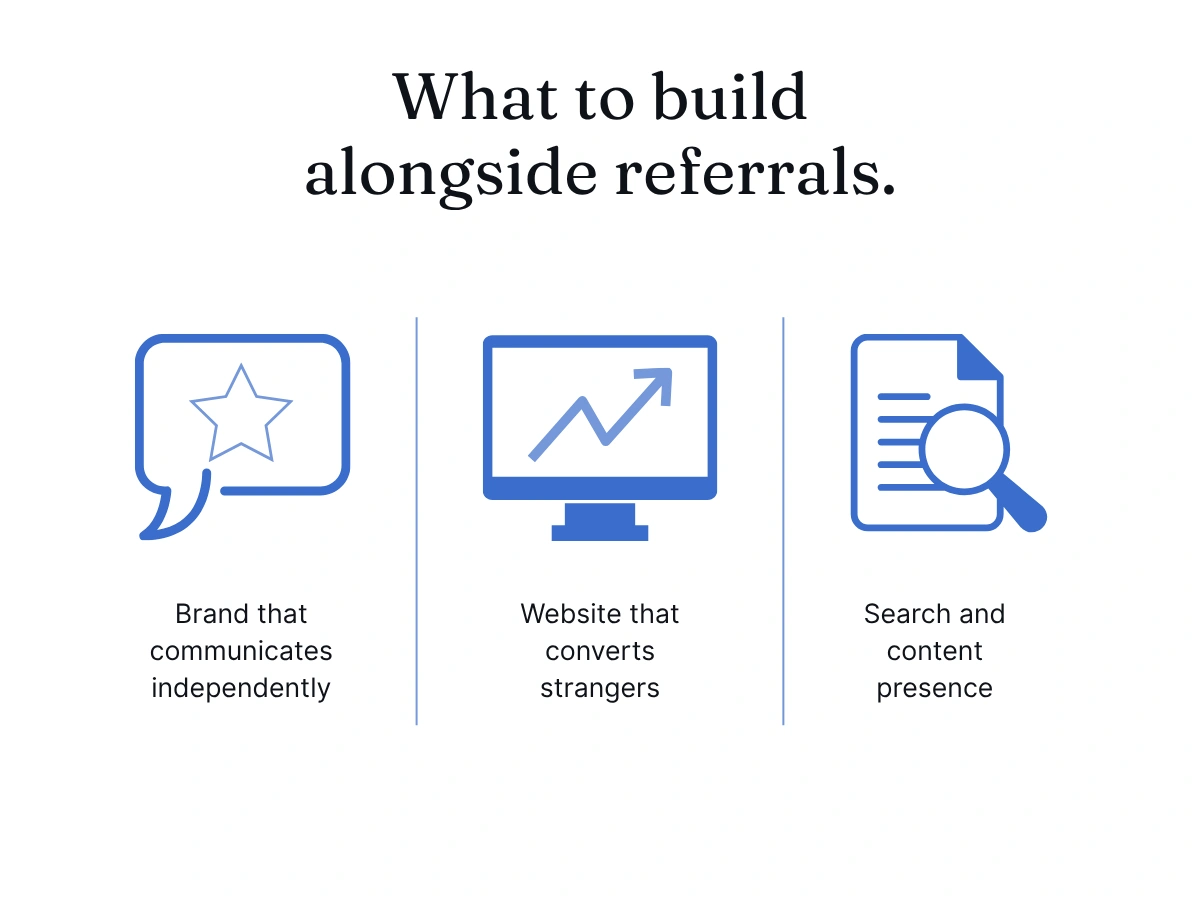
The goal is not to replace referrals. Referrals are still excellent clients, they arrive with a level of trust already established, they tend to convert quickly, and they have a lower cost of acquisition than cold leads. The goal is to build something that works in parallel, so the business is not dependent on the referral pipeline remaining healthy.
A brand that communicates independently. The way your business presents itself online needs to do the trust-building work that a referral normally does. A prospective client who finds you through search or social has no mutual connection to reassure them. Your brand, your website, your positioning, and your proof need to carry that weight on their own.
A website built to convert strangers, not just confirm known quantities. A referral arrives at your website already half-convinced. A cold prospect arrives needing to be convinced entirely. The site that works for one will not necessarily work for the other. A site built for growth needs to take a visitor from unfamiliar to confident without a human intermediary.
A search and content presence that creates discovery. If people cannot find you without already knowing you exist, the ceiling stays in place. SEO and content work together to make discovery possible for people at the exact moment they are looking for what you do.
None of this replaces the relationships and quality of work that built the referral business. It extends its reach to people those relationships cannot touch.
Referrals built your business. A brand and website will take it further.
At WQ Creative, we work with service businesses that have outgrown their referral network and are ready to build the brand and web presence that attracts clients independently. Book a free discovery call with Hayley.