There is a particular kind of business problem that never shows up on a profit and loss statement. It does not appear as a failed campaign or a lost pitch. It does not generate a complaint or a negative review. It is far quieter than that.
It is the client who visited your website, looked around for ninety seconds, and closed the tab. The prospect who found you through a referral, checked your brand, and went with someone else without ever explaining why. The price conversation that gets harder every year even though your work keeps getting better.
This is what an outdated brand actually costs. Not a single moment of obvious failure, but a slow, steady drain on the opportunities that should be coming your way and are not.
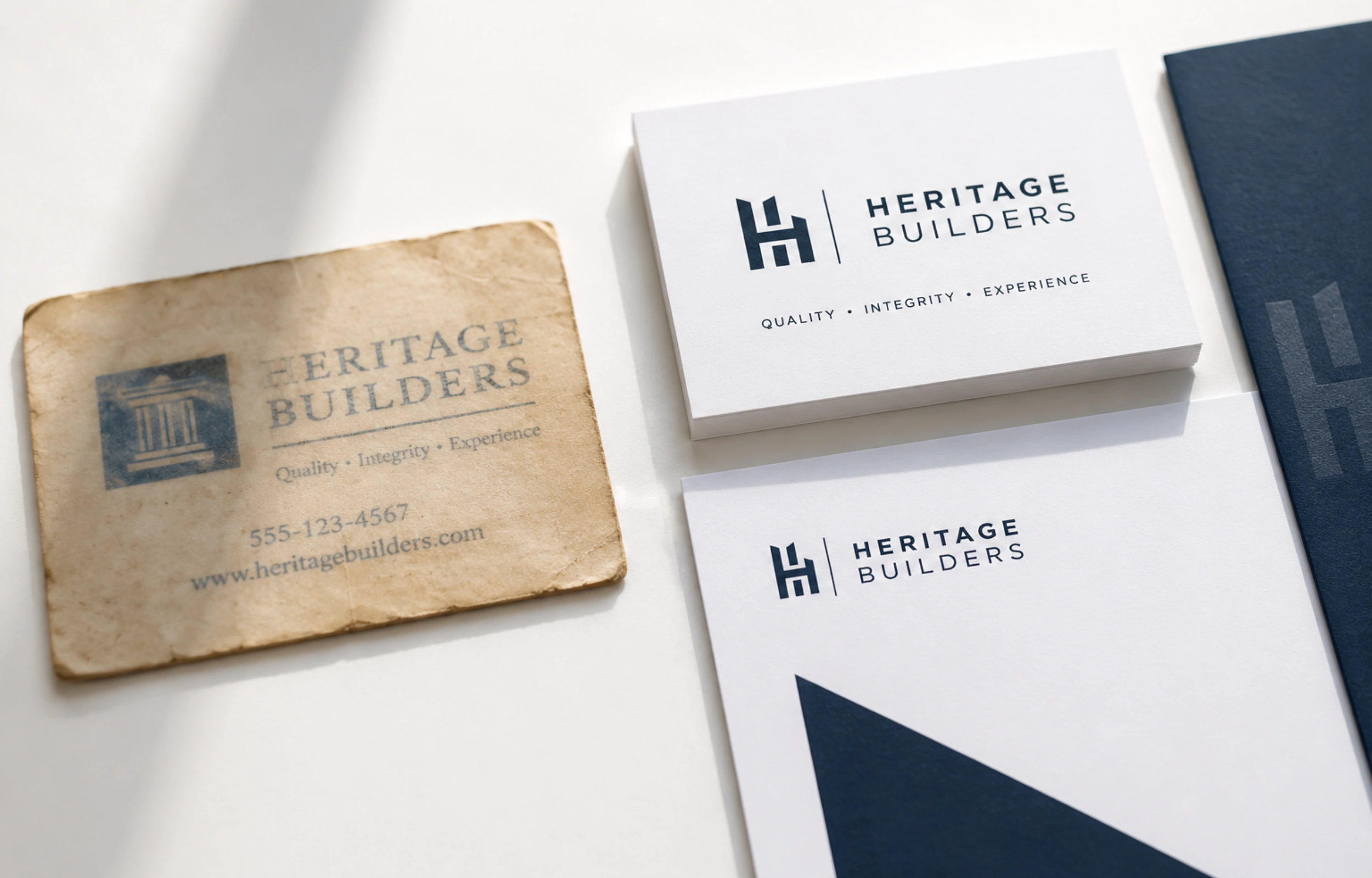
Most service business owners know, somewhere in the back of their mind, that their brand no longer reflects where the business is. The logo was done cheaply in the early days. The website was built when the business was finding its feet. The colours and fonts made sense then. They feel like a different era now.
What is less clear is what that mismatch is actually costing. This post tries to put a shape on it.
Your Brand Is a First Impression You Are Not There to Correct
Every service business owner knows they make a strong impression in person. On a discovery call, in a meeting, in the work itself. The problem is that most prospective clients never get that far.
Before they book a call, before they send an enquiry, before they do anything that shows up in your pipeline, they look you up. They check your website. They look at your social presence. They form a judgment based entirely on what they find, without you in the room to provide context, warmth, or reassurance.
That judgment is not always conscious. It is not a careful analysis of your logo against your competitors. It is faster and more instinctive than that. Within a few seconds, the visitor has a felt sense of whether this business is at the level they are looking for. And if the brand is not meeting them at that level, they move on.
The frustrating part is that you never find out it happened. There is no record of the people who visited and left. No data on the enquiries that were never sent. The cost is real, but it is invisible in a way that makes it easy to overlook until it becomes impossible to ignore.
The Four Places an Outdated Brand Costs You Money
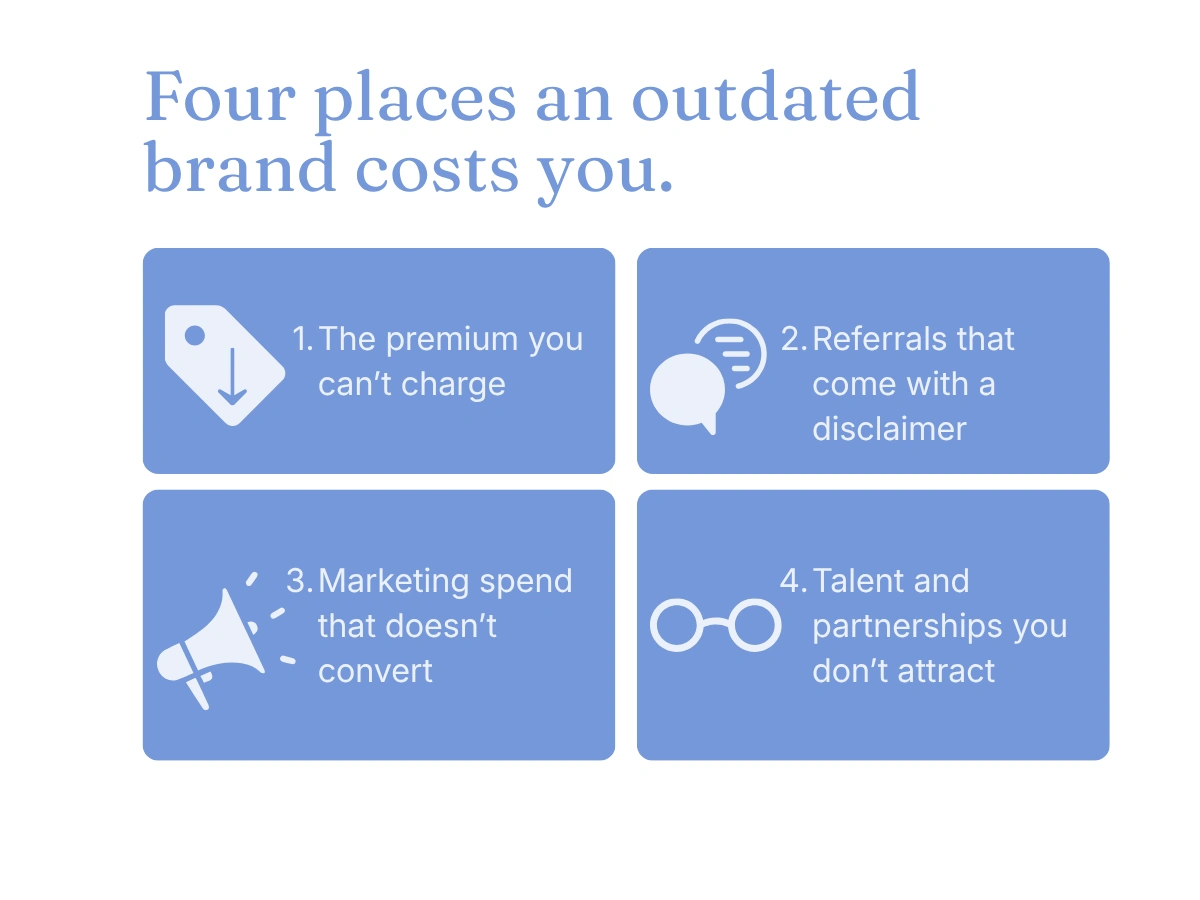
1. The premium you cannot charge
Pricing is not just a number. It is a signal. And the signal your pricing sends is calibrated against everything else the client has seen from your business before they reach the quote.
A client who has landed on a polished, confident, well-considered brand arrives at the price conversation expecting to invest at a certain level. A client who has landed on a dated, inconsistent, or generic brand arrives expecting to pay less, often significantly less, before you have said a word.
This means that every time a prospect interacts with your brand before they contact you, your brand is either supporting the rate you need to charge or quietly undermining it. Research into brand perception consistently shows that businesses with strong, consistent visual identities are able to command higher prices for equivalent work because the perceived value of the service is higher before the conversation even begins.
For service businesses especially, where what is being sold is largely intangible, the brand is doing an outsized portion of the work of establishing value. An outdated brand makes that work harder at exactly the moment it should be easiest.
2. The referrals that come with a disclaimer
Referral business is the lifeblood of most service businesses. But not all referrals arrive equal. And one of the clearest signals that a brand is working against you is when your best clients start pre-apologising for your rates when they refer you.
You have probably heard it. 'She is really good but she is not cheap.' 'His work is great, just so you know it is an investment.' These disclaimers come from a real place. The referring client loves your work but knows your brand does not communicate premium, so they cushion the landing.
What that means in practice is that referred prospects arrive with price resistance already installed. They have been told to expect sticker shock. They are coming in braced rather than excited. That is a much harder conversation to have than the one where the brand has already done the work of communicating value before the referral ever picks up the phone.
3. The marketing spend that does not convert
Many businesses with outdated brands try to compensate with more marketing. More social posts, more ads, more content, more visibility. The logic is understandable: if the business is not growing the way it should, reach more people.
But traffic sent to a brand that does not convert is expensive traffic. The awareness campaign works. People click through. They look around. And then they leave, because the brand does not give them a reason to stay or act. The marketing budget is doing its job. The brand is not doing its job. And the cost compounds with every campaign.
Consistent branding across every touchpoint has been shown to improve revenue outcomes significantly. The reverse is also true: inconsistent or outdated brand presentation creates confusion and erodes the confidence that marketing spend is trying to build. Fixing the brand before scaling the marketing is almost always the higher-return move.
4. The talent and partnerships you do not attract
The cost of an outdated brand is not limited to client acquisition. It also affects who wants to work with you, collaborate with you, or be associated with your business.
Talented contractors, potential partners, and aligned collaborators make the same kind of rapid brand judgment that prospective clients do. A business that looks like it is operating at a lower level than it actually is will attract interest at that lower level. The people you most want in your corner are looking for evidence that you are the kind of business they want to be associated with. Your brand is that evidence.
Wondering whether your brand is working for you or against you?
Book a free discovery call with Hayley. We can look at what your current brand is communicating and whether it reflects the business you are actually running.
How to Tell if Your Brand Has Fallen Behind
Most business owners sense this before they can articulate it. The brand feels slightly embarrassing to share. You hesitate before sending someone your website link. You tell people 'it is due for an update' as a pre-emptive apology.
Those feelings are information. But there are also more concrete signals worth paying attention to.
Your work has grown but your brand has not
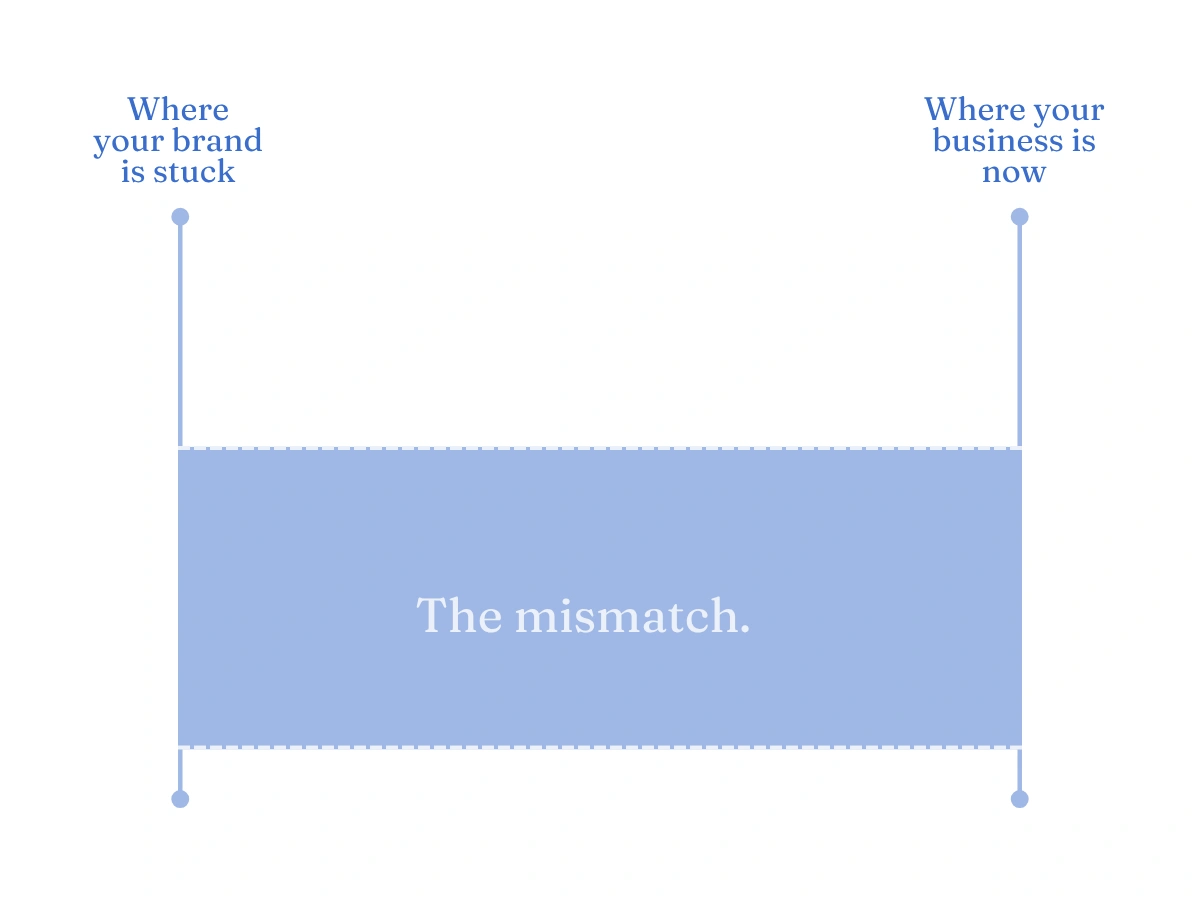
This is the most common pattern. The business started small, the brand was put together quickly and cheaply, and over time the quality and scope of the work expanded significantly while the brand stayed exactly where it was.
The result is a mismatch that clients can feel even if they cannot name it. The work being pitched is at one level. The brand presenting it is at another. That gap creates doubt, and doubt delays or prevents decisions.
You are attracting the wrong clients
Your brand is a filter. It is constantly signalling who this business is for, what level of investment is appropriate, and what kind of relationship to expect. If the clients who are finding you are consistently more price-sensitive, more demanding, or less aligned with the work you want to be doing, the brand is worth examining.
Premium clients, the ones who value quality, trust the process, and pay without friction, are not distributed randomly. They are concentrated around businesses whose brands communicate the things they care about: expertise, care, confidence, and professionalism. An outdated brand signals the opposite of all four.
Your conversion rate has softened
If you are getting enquiries but fewer of them are converting, and the work and pricing have not changed dramatically, the brand touchpoints in between are worth examining. What does a prospect see between finding you and booking a call? What impression does that journey create? Is every touchpoint adding confidence or introducing doubt?
How Do I Know if My Brand Is Costing Me Clients?
Your brand is costing you clients when the quality of your work has grown past the quality of how your business presents itself. The signs are subtle: premium prospects go quiet after visiting your website, you compete on price more than you used to, and referrals apologise for your rates before you have even quoted. An outdated brand does not announce itself. It just quietly undercuts everything you are trying to build.
A Refresh Is Not Always a Rebrand
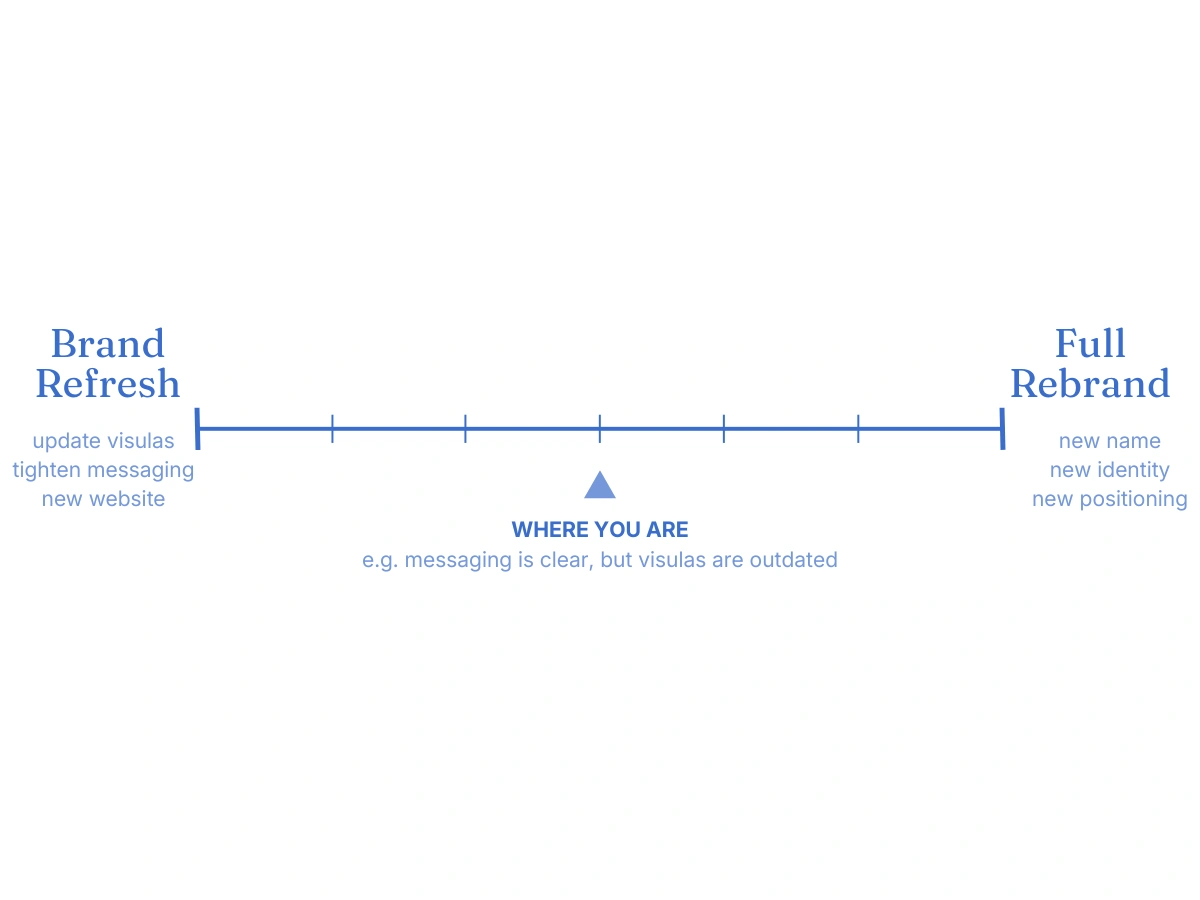
One reason business owners put off addressing an outdated brand is the assumption that fixing it means starting from scratch. A full rebrand, a new name, new visual identity, new website, months of work and a significant investment.
That is sometimes the right answer. But more often, the foundation is sound and what is needed is a refresh rather than a rebuild. Bringing the visual identity up to the standard of the current business, tightening the messaging, updating the website to reflect where the business actually is now.
The question worth asking is not 'do I need to rebrand' but 'is my current brand accurately representing the business I am running today.' If the answer is no, the scope of what needs to change will follow naturally from that honest assessment. Sometimes it is significant. Often it is more targeted than expected.
What it is never, once you have done it, is something you wish you had waited longer to address.
Your brand should be working as hard as you are.
At WQ Creative, we work with service-based businesses to build brands that accurately reflect the quality of the work and position them to attract the clients they actually want. If your brand has fallen behind the business, book a free discovery call with Hayley.

.png)