
You booked out three months in advance. Clients refer you constantly. Your work gets results. And yet, when the invoice goes out, something in you softens the number before you hit send.
This is not a rare story. It might be the most common one in service-based business.
The problem is not that you do not know your worth. The problem is that the way most service businesses are priced has almost nothing to do with worth. It is driven by comparison, comfort, and a quiet fear that if the number gets too high, the phone stops ringing.
In this post, I want to break down exactly why good service businesses stay underpriced. Not to make you feel bad about your rates, but to help you see that the problem is structural, not personal. And once you see it clearly, fixing it gets a lot more straightforward.
You Priced Yourself Against the Market, Not Against Your Value
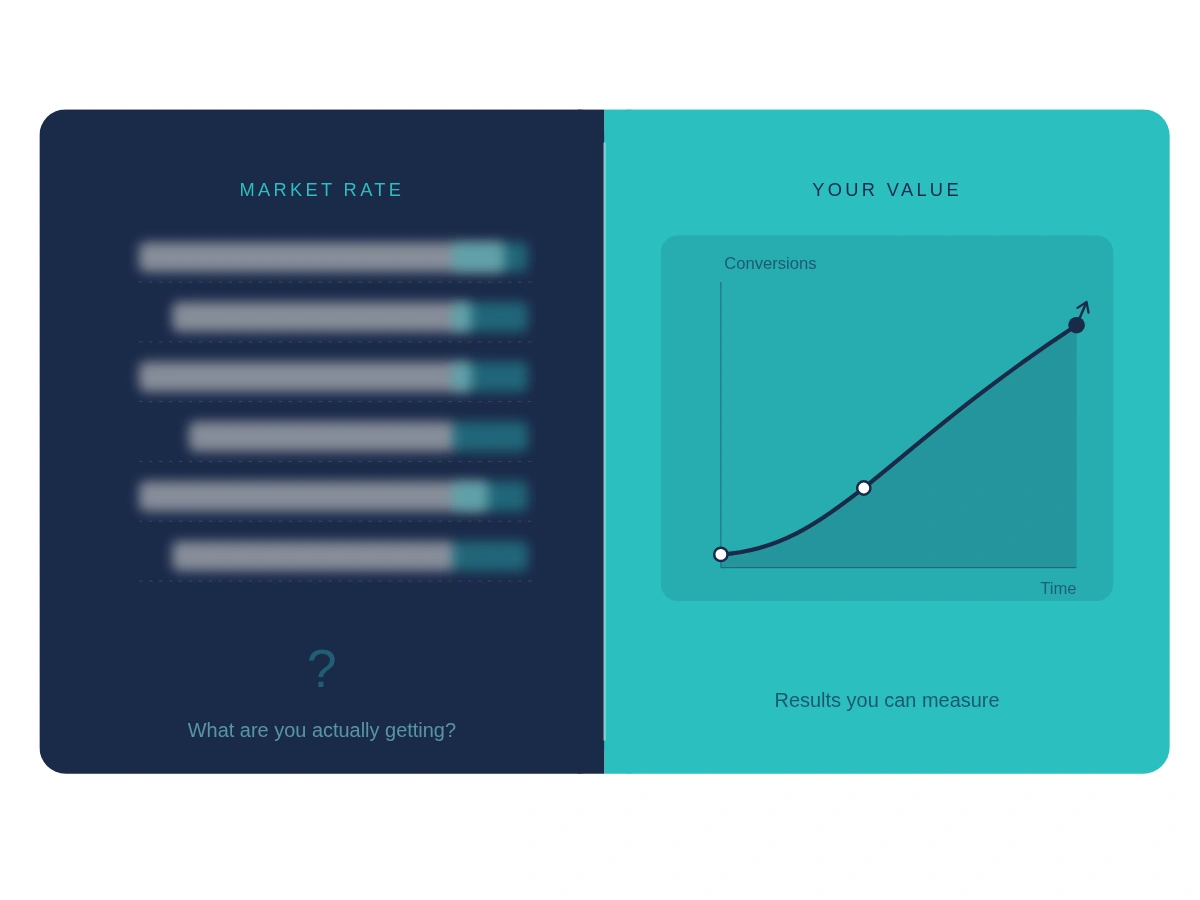
Most service businesses set their initial rates the same way. They look at what others in their space are charging, land somewhere in the middle, and call it done. It feels sensible because it feels safe.
But here is the problem with that logic: you have no idea what your competitors' actual cost structures look like. You do not know their overheads, their margins, their level of experience, or what they are quietly losing on every project. You are benchmarking your rate against an unknown number and then wondering why the maths never quite works out.
The comparison trap keeps you stuck at average
When you price from the market, you opt into the average. You are not communicating what makes your work different. You are signalling that you are roughly equivalent to everyone else and will compete on proximity, availability, or a small discount.
That is a hard position to hold. It attracts clients who are price-sensitive by default, because nothing in your pricing invites them to think otherwise.
Value-based pricing starts from a different question. Not 'what is everyone else charging?' but 'what does this work actually do for the client?' A website redesign is not a deliverable. It is more leads, a stronger first impression, and a platform that can carry a business for the next five years. Price the outcome, not the output.
Is your website communicating the value behind your work, or just listing your services?
Book a free discovery call with Hayley to find out what your positioning is costing you.
Your Website Is Doing the Undercharging Before You Say a Word
Here is something most service business owners do not consider: your pricing conversation starts long before you quote a number. It starts when a potential client lands on your website.
If your site looks like it was built five years ago, uses stock photography that could belong to any business, and describes your services in vague generalities, you have already set a price anchor in the client's mind. And it is low.
Positioning drives price expectation
Think about the last time you hired someone for a significant job. Did you look at their website? Did the quality of that site affect what you expected to pay?
Of course it did. We all do this. A polished, confident, well-structured presence signals expertise. It signals that this person knows what they are doing, has done it well before, and charges accordingly. A dated or unclear site signals the opposite, even when the work behind it is exceptional.
This is where a lot of good service businesses lose money they never even knew was on the table. The work is genuinely strong. But the online presence does not reflect that strength, so clients arrive with softened expectations and the pricing conversation starts from behind.
Your brand and website are not cosmetic. They are your pricing infrastructure. Get them right and the number you quote feels like a natural extension of the value you have already demonstrated. Get them wrong and you will always be defending a rate that your positioning has already undermined.
You Are Counting Your Hours, Not Your Expertise
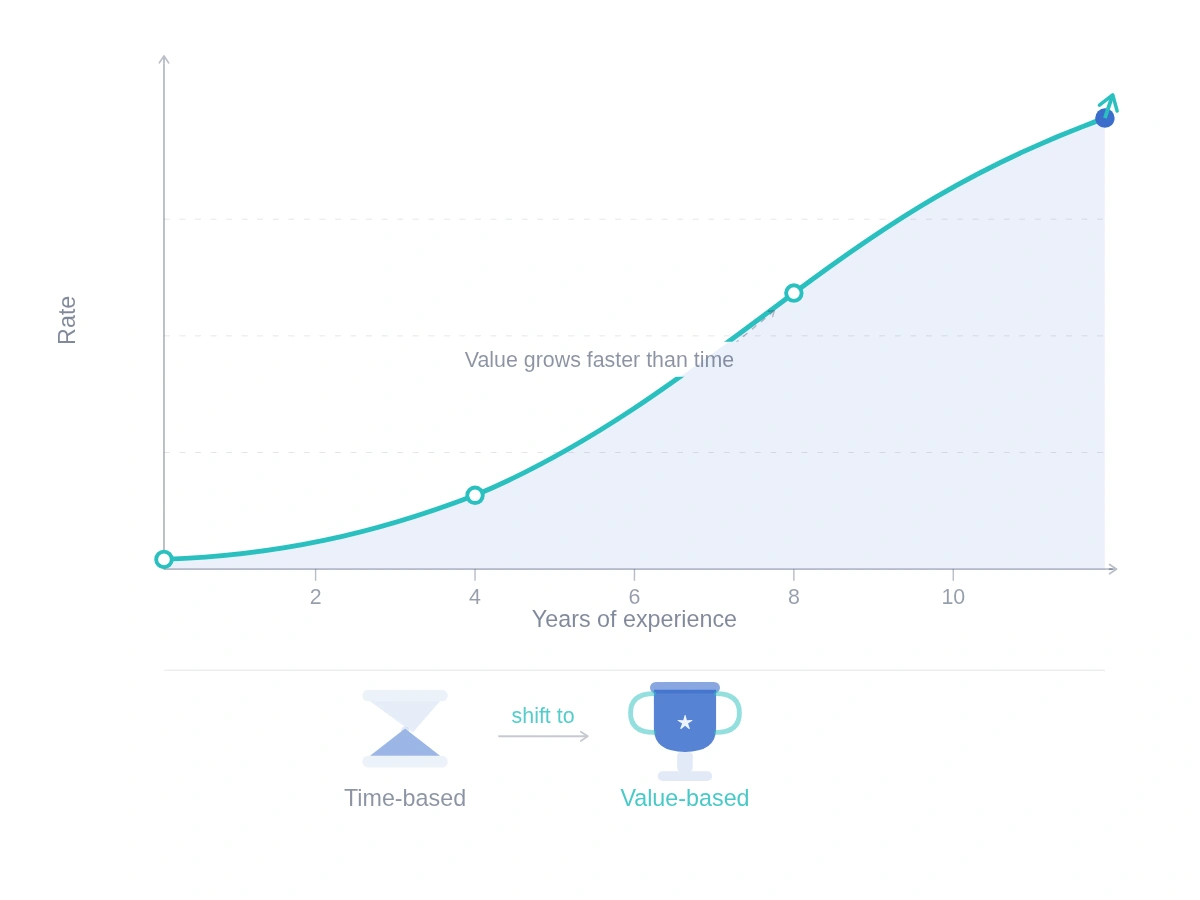
The other deeply embedded reason good service businesses stay underpriced is how they think about what they are actually selling.
If you quote based on how long something takes, you are pricing your time. But your clients are not buying time. They are buying the result that your time produces. And the value of that result has nothing to do with how many hours it took to deliver.
Experience should make your rate go up, not down
Here is the quiet trap that catches experienced operators. As you get better at what you do, you get faster. A website strategy session that used to take you three hours now takes ninety minutes because you have developed the pattern recognition to move quickly. If you are billing hourly, you just took a pay cut for being better at your job.
Value-based pricing flips this entirely. If a project takes you fewer hours because your expertise is high, the client still gets the same outcome. The outcome is what they are paying for. Your efficiency is not a reason to charge less. It is evidence that your rate should be higher.
This shift in thinking is uncomfortable at first because it requires you to stop anchoring your price to inputs and start anchoring it to results. That takes confidence in what your work actually delivers. But if you have case studies, testimonials, and a track record, you already have the evidence. You just have not connected it to the number you quote.
The Clients Who Never Push Back Are Worth Paying Attention To
Here is a counterintuitive signal that you are underpriced: nobody ever questions your rates.
If every single prospect accepts your quote without comment, if nobody ever comes back and asks you to justify the investment, if you never lose work because of price, your rate is almost certainly too low. Occasional price resistance is healthy. It means you are operating at the upper edge of your market position, which is exactly where a quality service business should be.
The clients underpricing attracts
Low rates do not just cost you money directly. They shape who you attract. Price-sensitive clients tend to be the most demanding ones. They ask for more revisions. They question your process. They push on scope. Not because they are bad people, but because when someone pays a low price, they feel entitled to extract maximum value from every interaction.
Clients who pay a rate that reflects real value tend to show up differently. They trust the process because they invested in it. They respect your expertise because the price signalled that expertise was worth respecting. Premium pricing does not just improve your margin. It often improves the entire client relationship.
Why Do Good Service Businesses Charge Too Little?
Good service businesses undercharge because they price from fear rather than value. They anchor rates to what competitors charge or what feels comfortable to ask, rather than to the outcomes they deliver. The result is a business that stays busy, stays stretched, and stays stuck below what its work is actually worth.
The fear is real and understandable. What if the client says no? What if I price myself out of the market? What if raising rates means losing the relationships I have spent years building?
But here is what the data consistently shows: most service businesses lose fewer than five percent of clients after a reasonable price increase. The clients most likely to leave over a modest rate adjustment are almost always the most price-sensitive and least profitable ones. The revenue gained from the clients who stay far exceeds what is lost.
Raising your rates is not about confidence as some kind of personality trait. It is about having clear evidence of results, a website that reflects your quality, and positioning that makes the number feel earned rather than arbitrary. Get those three things right and the rate conversation changes.
The Number You Quote Is a Statement About Your Work
Every service business owner I have worked with who has raised their rates well says the same thing afterward: they cannot believe they waited so long.
Underpricing is not humility. It is not smart positioning. It is a slow drain on your energy, your margins, and your ability to deliver the quality of work you are actually capable of when you are not stretched thin.
Your pricing is a form of communication. It tells prospective clients what category you are in, what kind of relationship you are offering, and what results they should expect. A rate that reflects your expertise says: this person knows what they are doing and they can prove it.
If your website, your brand, and your positioning are not backing that number up, that is the gap worth closing first. Because the best pricing strategy in the world will not hold if the first impression does not match the ask.
Ready to price like the business you actually are?
At WQ Creative, we work with purpose-led service businesses to build the brand and web presence that makes premium pricing feel obvious. Not just to you, but to every client who finds you.